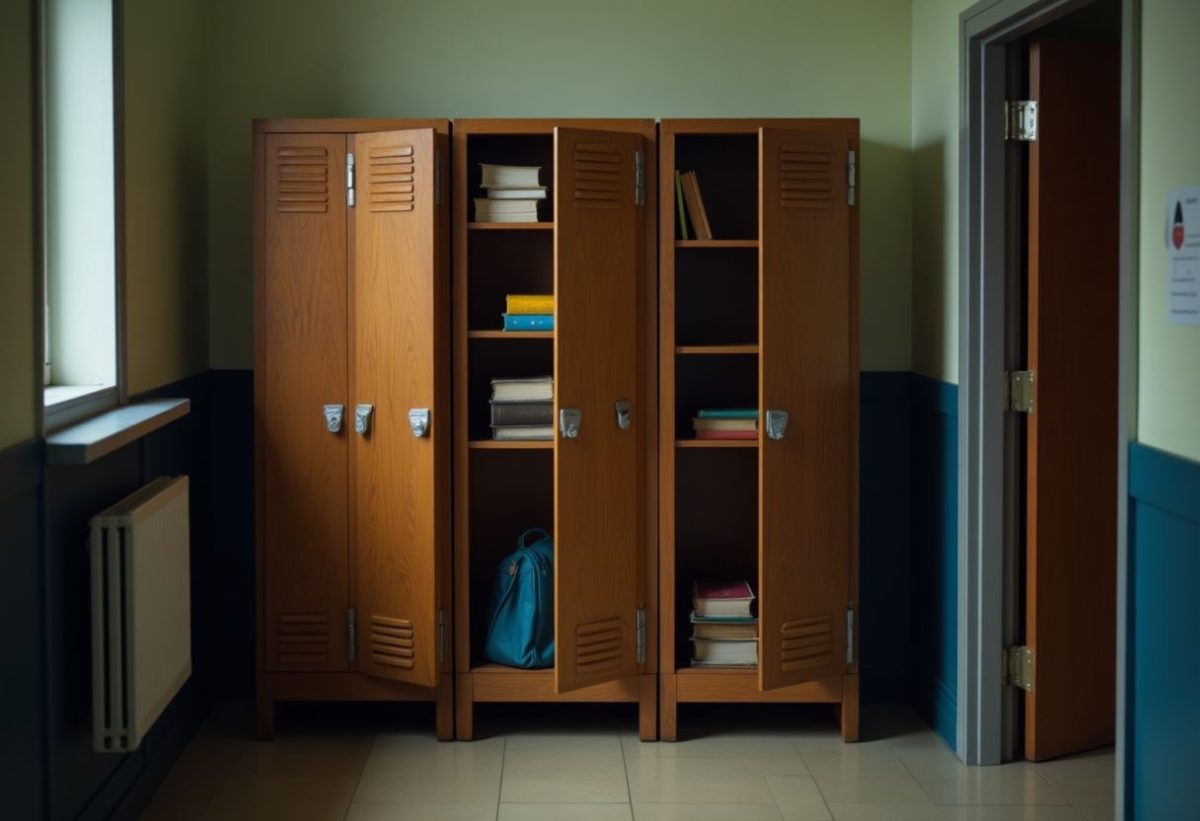
The school locker is often perceived as a simple storage space. However, behind its metal door lies an educational tool of great importance. School lockers are ubiquitous in educational institutions, ranging from elementary schools to universities. They not only serve to store textbooks, supplies, and personal belongings but also teach students organization, responsibility, and even autonomy.
The history of the school locker
To understand the importance of the school locker in the educational framework, it is essential to look back at its origins. The evolution of school lockers reflects changes in the educational system itself.
The first school lockers appeared in the United States in the early 20th century. At that time, public education was rapidly developing, necessitating effective storage solutions. Lockers were introduced to relieve students of the burden of their books. Gradually, they evolved to meet the changing needs of students and educational institutions. In the 1960s and 1970s, as schools became larger and more diverse, lockers became a standard feature in school hallways.
Over time, lockers have undergone improvements not only in terms of size and security but also in design and functionality. The materials used have evolved, transitioning from wood to metal, and then to modern composite materials, reflecting the growing concerns regarding safety and durability. Today, many institutions use electronic lockers, symbols of the digital transformation in education.
The educational benefits of school lockers
School lockers are not merely a space to store personal items; they play a significant role in the development of students’ skills.
- Organization: Learning to manage the limited space of a locker teaches students to effectively organize their belongings, a valuable skill throughout life.
- Responsibility: Students with a locker are responsible for their belongings, which encourages them to take care of their property and adhere to school rules.
- Autonomy: Having a personal space in school where they can store their items allows students to develop a sense of autonomy.
- Security: By storing their personal belongings in a secure locker, students can focus more on their studies without worrying about losing or having their items stolen.
The challenges and controversies surrounding school lockers
Despite their many advantages, school lockers are not without challenges. Several debates surround their use and management in educational institutions.
Security is often at the heart of concerns. In some institutions, lockers can be used to conceal prohibited items. This has led to debates about surveillance and students’ right to privacy. Some schools have responded by adopting lockers with transparent doors or limiting access during class hours.
Maintenance and replacement costs represent another challenge. Lockers require regular maintenance to ensure their proper functioning. Additionally, damaged lockers represent extra costs for schools, which can strain the budgets of institutions, especially in underprivileged areas.
Finally, the rise of digital technologies is changing the use of lockers. With the increase in online educational resources, some argue that lockers are becoming obsolete. However, as long as students continue to carry personal items and textbooks, the need for lockers will persist.
Looking to the future: the evolution of school lockers
The future of school lockers is promising, with innovations aimed at addressing current challenges while anticipating the future needs of students and institutions.
- Digital or electronic lockers are becoming increasingly popular. These lockers incorporate technologies such as code or ID card access, allowing for secure and simplified entry.
- There is a growing trend towards increased modularity. Modern lockers can be reconfigured to meet the specific needs of students, offering more flexibility and customization.
- Sustainability also influences locker design. Recycled materials and environmentally friendly manufacturing practices are becoming key criteria in the selection of school lockers.
- Finally, the concept of shared or community lockers is emerging, encouraging collaboration and interaction among students while optimizing available space in crowded schools.