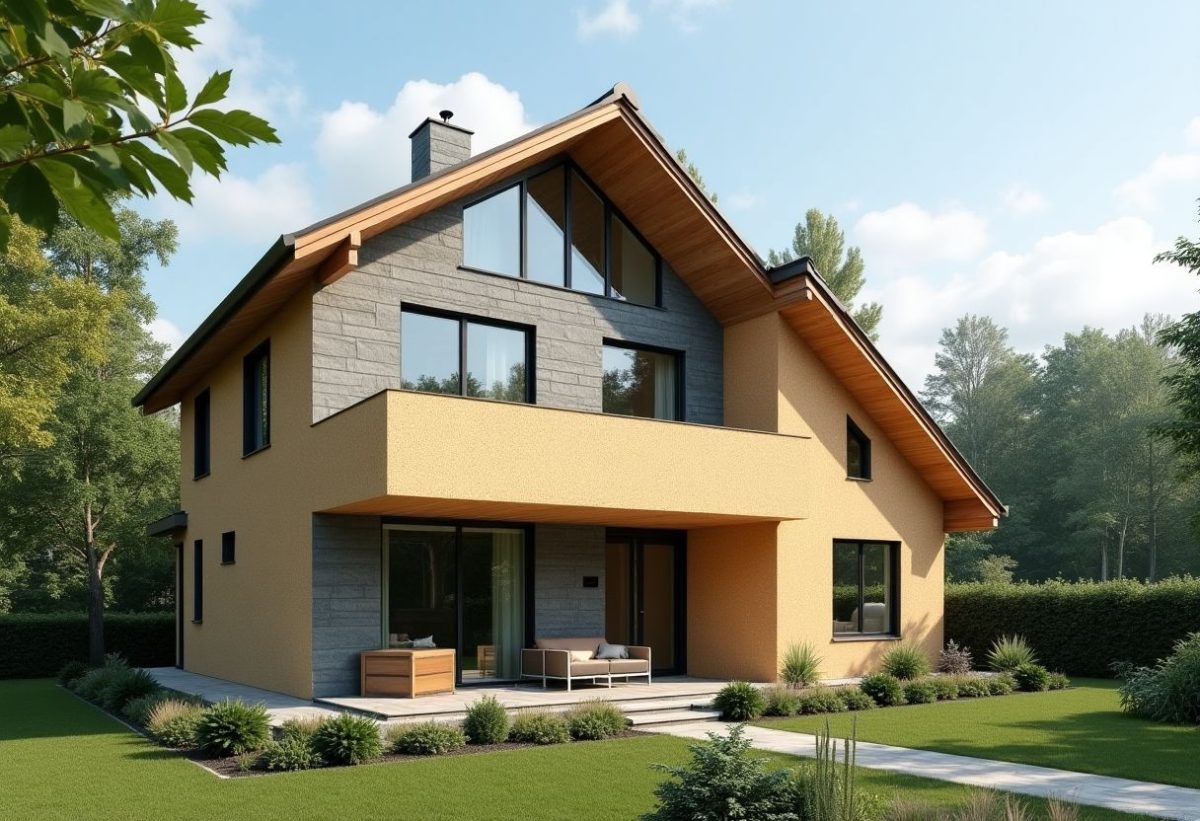
The thermal insulation of a house is a major issue for anyone looking to combine comfort, energy savings, and respect for the environment. In this context, external insulation stands out as an effective solution to improve the energy performance of buildings. By enveloping the exterior walls with an insulating coating, this technique not only provides a significant thermal improvement but also helps to renovate the appearance of your home.
With increasingly strict thermal regulations and the need to reduce our carbon footprints, understanding the advantages and mechanisms of this form of insulation is more relevant than ever.
The principles of external insulation
Understanding the workings of external insulation is essential to appreciate all its benefits. This process is distinguished by various unique characteristics that differentiate it from other insulation methods.
- Continuous insulating layer: By applying a continuous layer of insulation around the house, external insulation minimizes thermal bridges, which are responsible for significant heat loss.
- Building protection: By protecting load-bearing walls from temperature fluctuations, this technique preserves the structure of the building from damage caused by freeze-thaw cycles.
- Aesthetic improvement: It provides the opportunity to renew the appearance of your facade, which increases the market value of the property.
Undeniable advantages
External insulation is not just an ecological gesture. It offers a wide range of benefits that deserve to be explored in detail.
First, this method significantly improves indoor comfort by ensuring a stable and pleasant temperature throughout the year.
Next, by reducing heating and cooling needs, it allows homeowners to achieve substantial savings on their energy bills.
Moreover, it contributes to environmental preservation by decreasing fossil energy consumption and greenhouse gas emissions.
Finally, with the help of numerous grants and financial aids, the initial investment can be recouped more quickly.
Disadvantages to consider
While the advantages are numerous, it remains important to weigh the disadvantages to make an informed decision.
- High cost: The initial cost of external insulation can be prohibitive for some homeowners, although future energy savings generally offset this investment.
- Modification of external appearance: Some may not appreciate the aesthetic alteration brought by the new facades, although it also offers the opportunity for visual improvement.
- Local regulations: It is advisable to check local planning standards before starting work, as some plans may be subject to restrictions.
Materials used for insulation
The selection of materials plays a crucial role in the effectiveness of insulation. Several options are available, each with its own characteristics.
Expanded or extruded polystyrene panels are frequently used due to their light weight and low cost.
Mineral wool, on the other hand, offers excellent thermal performance and good fire resistance.
Cork, although a bit more expensive, is a valued eco-friendly option for its natural insulating properties.
Finally, bio-based materials like wood fiber are increasingly appealing due to their low environmental impact and ability to regulate humidity.