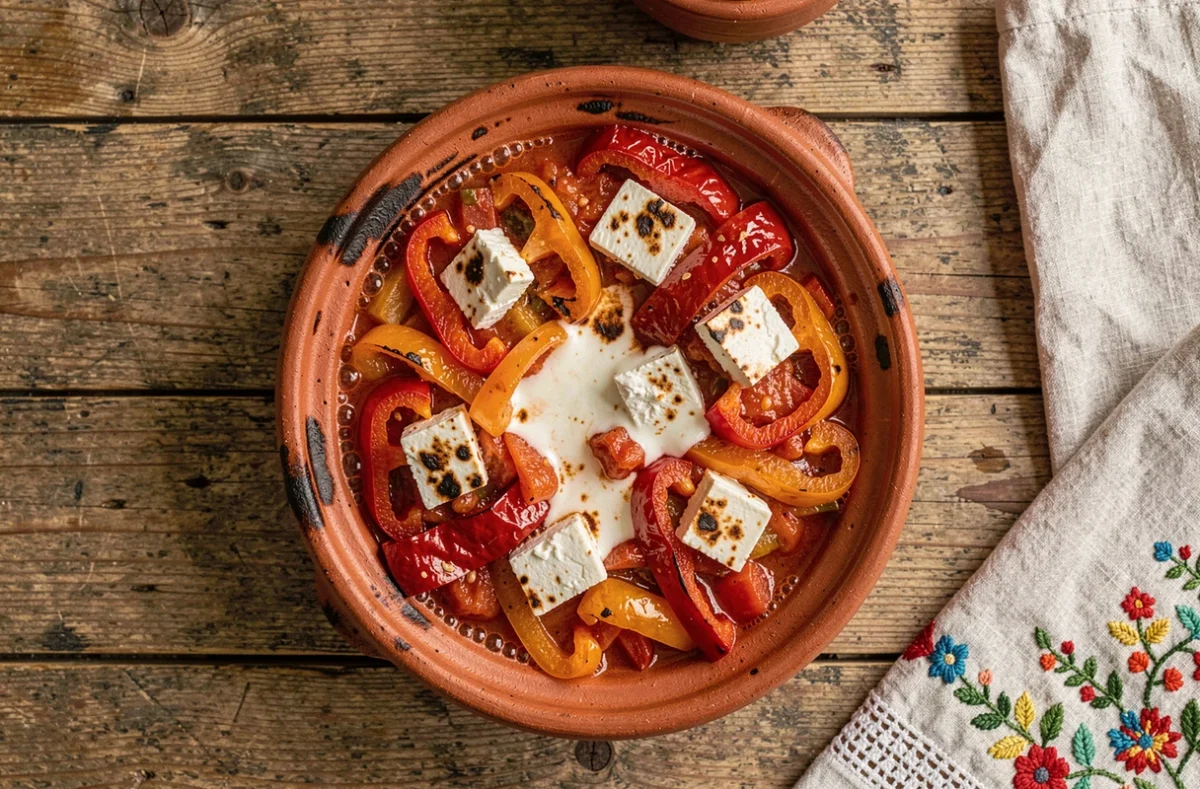
The fergese of Tirana is an Albanian vegetarian dish that comes in several versions depending on families and regions. Peppers, tomatoes, fresh cheese: the ingredients are few, but their combination and proportions vary enough that no recipe achieves unanimous approval. Understanding these variations allows one to choose the version that suits their tastes even before starting to cook.
Vegetarian fergese or liver fergese: what the variations reveal about the dish
The word “fergese” does not refer to a single recipe. It encompasses a family of preparations that share a common cooking technique: sautéing the ingredients, in line with the probable etymology of the Albanian verb fërgoj.
The version most often associated with Tirana is based on peppers, tomatoes, and gjizë, a fresh Albanian cheese similar to ricotta. Another version, sometimes presented as the historical form of the capital, includes calf or lamb liver.
| Criterion | Vegetarian fergese (peppers and gjizë) | Liver fergese |
|---|---|---|
| Protein base | Gjizë (fresh cheese) or ricotta | Calf or lamb liver |
| Main vegetables | Red peppers, tomatoes | Peppers, tomatoes (reduced quantity) |
| Fat | Olive oil | Olive oil or butter |
| Ideal season | Autumn-winter (in-season peppers) | All year round |
| Authenticity status | Contested: emblematic for some, variant for others | Contested: historical for some, secondary for others |
The disagreement over the authenticity of each version shows that fergese does not have a fixed official recipe. Albanian families adapt the dish to what they find at the market and their habits.
To explore in detail the ingredients and steps of the version with peppers and cheese, the fergese recipe from Tirana outlines each step precisely.
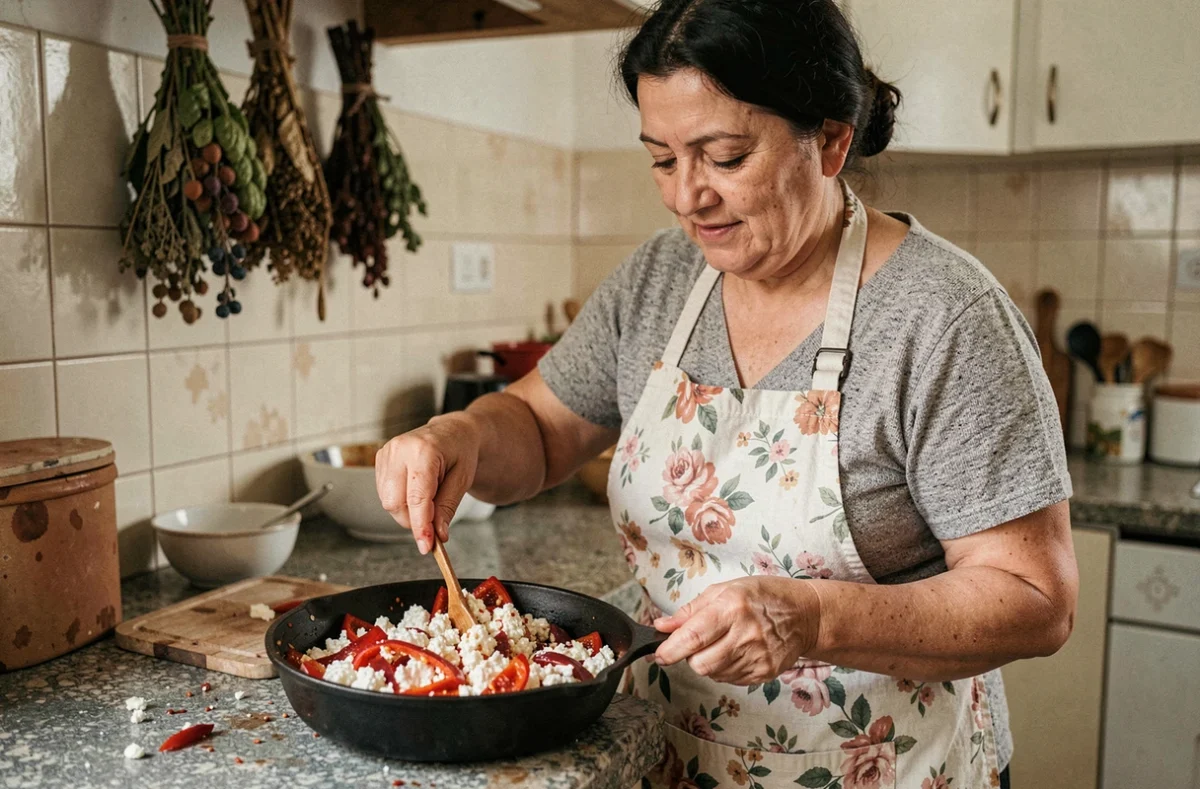
Red peppers and gjizë: the ingredients that define the fergese of Tirana
The vegetarian version of fergese relies on a limited number of ingredients. It is this simplicity that makes the choice of each component crucial.
Gjizë, fresh cheese at the heart of the dish
Gjizë is a fresh Albanian cheese made from whey. Its grainy and slightly acidic texture gives it a structural role in fergese: it partially melts during cooking and creates a thick sauce that coats the peppers.
Outside of Albania, ricotta is the most common substitute. Some culinary blogs also use crumbled feta mixed with ricotta to replicate the acidity of gjizë. The result differs slightly in texture, but the principle remains the same: a fresh cheese that binds with the vegetables without overpowering their flavors.
Red peppers, not green
Albanian recipes systematically specify red peppers. Their flesh is sweeter and more tender than that of green peppers, making them better suited for long cooking. They release juice that mixes with the tomato sauce and cheese to form the dish’s characteristic consistency.
The quantity varies according to sources. Some families count one pepper per person, while others use more. The ratio of peppers to cheese determines whether the dish will be creamy or drier.
- Red peppers: seeded and cut into small cubes, they are cooked covered over medium heat until tender.
- Tomato sauce: a small amount of peeled tomatoes (preferably homemade) provides acidity and color. Too much tomato sauce drowns out the flavor of the peppers.
- Olive oil: two tablespoons are enough to start cooking. Traditional recipes sometimes use more.
- Salt and pepper: the only necessary seasonings. No herbs or additional spices in the classic version.
Cooking the fergese: technique and common mistakes
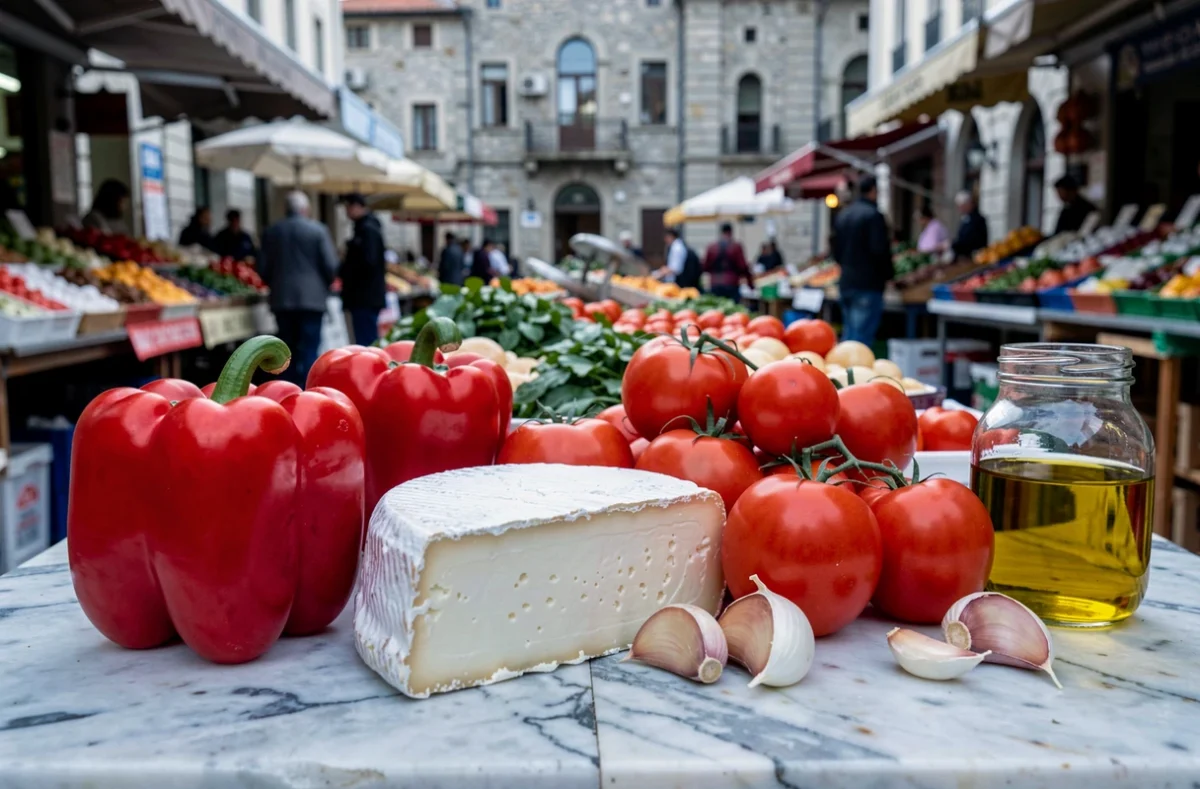
The cooking method distinguishes a successful fergese from a simple gratin of peppers. The dish is prepared in a single pot, making it suitable for modest kitchens, but the sequence of steps matters.
The peppers must first cook alone in olive oil, covered, until tender. This steaming phase concentrates their flavors. Adding the tomato sauce too early dilutes the taste of the peppers and unnecessarily prolongs the cooking time.
The fresh cheese is added at the end of cooking, off the heat. If gjizë or ricotta cooks too long, it hardens and forms lumps instead of melting into a creamy sauce. The mixing is done directly in the hot pot: the residual heat is enough to bind the ingredients.
The oven step, sometimes mentioned in certain adaptations, does not belong to the traditional method. It results in a gratin that strays from the original texture, which is closer to a creamy stew.
Fergese and Albanian cuisine in Tirana: a restaurant or family dish
In Tirana, fergese is featured on the menus of many restaurants offering traditional Albanian cuisine. The dish is usually served bubbling, directly in the cooking vessel, accompanied by fresh bread.
This pot service is not just a presentation: it keeps the fergese warm and prevents the cheese from solidifying as it cools. Fergese is eaten hot, almost steaming, with bread for dipping.
In the Albanian culinary context, fergese is alongside other dishes like byrek (pastry) or tavë kosi (lamb with yogurt). However, it stands out for its naturally vegetarian character, requiring no adaptation. This is a notable advantage in Balkan cuisine where meat holds a central place.
The simplicity of the dish, its short ingredient list, and its one-pot cooking method also make it an economical meal. The basic ingredients (peppers, tomatoes, fresh cheese) remain among the cheapest at Albanian markets as well as in Western Europe.
The fergese of Tirana serves as a marker of Albanian cuisine: a dish whose value lies in the quality of the ingredients rather than technical complexity. Ripe peppers, good quality fresh cheese, and minimal intervention are enough to produce a result that far more elaborate recipes struggle to match.