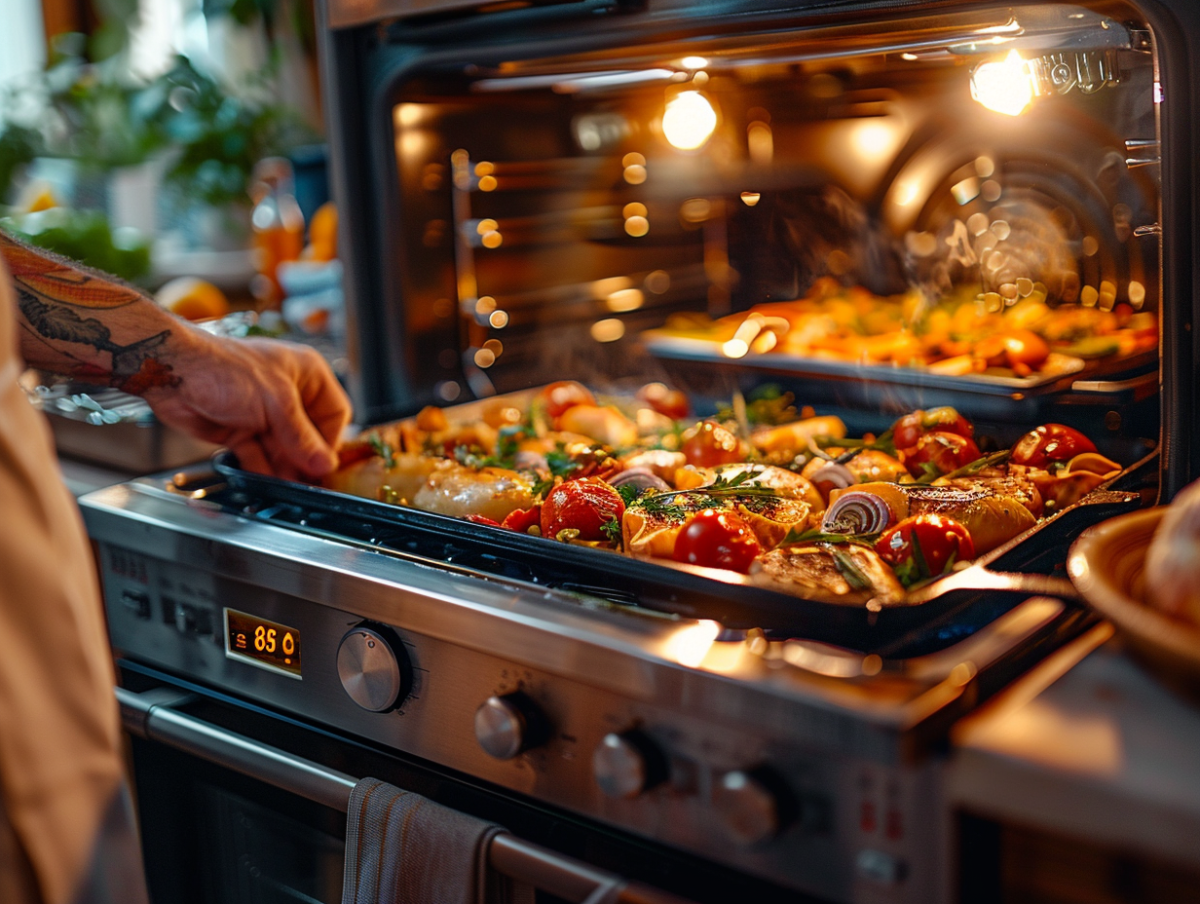
Mastering oven temperatures is fundamental for successfully preparing baked dishes. The correspondence between thermostat levels and degrees Celsius or Fahrenheit allows cooks of all experience levels to accurately follow recipes and achieve optimal results. Whether preparing a fluffy cake, a juicy roast, or perfectly roasted vegetables, understanding how to adjust the oven thermostat is essential. This skill not only ensures adherence to recipe requirements but also allows for adjustments based on personal tastes and the specifics of the ingredients used.
From Theory to Practice: Understanding Thermostat Levels
In the precise and sometimes intimidating world of gastronomy, cooking temperature is a technical detail that cannot be overlooked. At the heart of this issue is the thermostat number, this scale that governs the heat produced by our home ovens, which presents itself as a code to decipher for anyone aspiring to master culinary creations. Each number corresponds to a temperature in degrees Celsius, and this pairing is fundamental to respecting the specifications of our recipes.
Oven thermostat and temperature in degrees Celsius: the duo works in concert. Thermostat 1 corresponds to a temperature of 30°C, while thermostat 2 rises to 60°C. This continuous progression, where each increment on the thermostat scale increases the oven temperature by about 30°C, continues until reaching thermostat 8, synonymous with 240°C, a heat suitable for cooking preparations that require a very hot oven.
The categorization of oven temperatures ranges from warm to scorching, terms that, while illustrative, require precise translation to avoid culinary disappointments. Converting the thermostat number to degrees Celsius is therefore both a simple and essential operation: it involves understanding the heat requirements of the dishes one aims to create. After all, baking is a matter of precision, where heat must be adjusted rigorously.
For novice cooks as well as seasoned chefs, the thermostat number should not remain a mystery. The conversion process between the thermostat number and the temperature in degrees Celsius is a basic skill in cooking, allowing for the adaptation of any recipe to the specific operation of one’s oven. For example, thermostats 9 and 10, corresponding to 270°C and 300°C respectively, are reserved for demanding cooking, where high temperature is the key to the success of the dish.
Tips and Tricks for Successful Oven Cooking
Anticipating the specifics of each dish: a must for anyone engaging in the art of cooking. Indeed, cooking temperature varies not only according to the thermostat number but also based on the very nature of the dish being prepared. Meats, casseroles, cakes, each requires particular attention and an ideal temperature. For meats, for example, moderate to high heat is often recommended to sear the outside while preserving the moist interior.
Considering the material of the baking dish is also essential. Clay, aluminum, Teflon, tin, cast iron, black steel: each material has distinct thermal conduction properties that affect the final result. A clay dish, for instance, will retain heat and diffuse it slowly, ideal for long and gentle cooking, while aluminum, an excellent conductor, is suited for quicker and more even cooking.
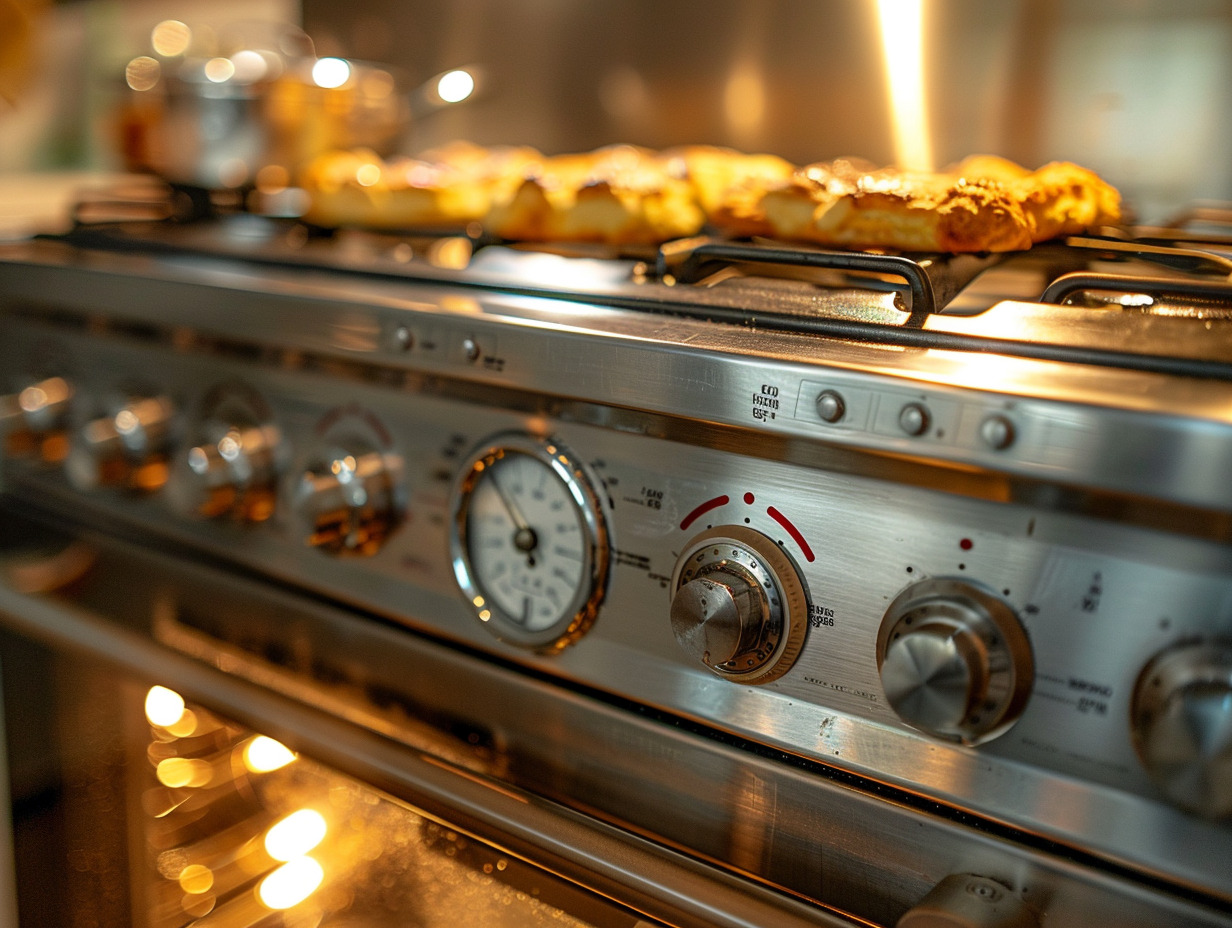
Beyond simply reading the thermostat, monitoring the cooking is crucial. Each oven has its own peculiarities, so it’s important to regularly check the cooking progress of dishes, even adjusting the temperature along the way. A thermostat 6 may vary slightly from one appliance to another, and personal experience with one’s own equipment becomes an invaluable guide.
Take into account the position of the dish in the oven. Top, middle, bottom, each location has repercussions on cooking: the top favors browning, the middle provides balanced heat, and the bottom offers gentler cooking. Understanding these nuances and mastering their application are assets for successfully preparing all your culinary creations, whether it’s perfectly searing a roast or giving a casserole that golden and crispy appearance that is so appreciated.