A couple planning four well-timed activities during the evening achieves a more memorable result than a succession of ten rushed games between two courses. The real lever is the format: voluntary participation, short duration, and a narrative thread that makes people want to stay. Here are ten concrete ideas, tested in the field, to animate a wedding without downtime or discomfort.
1. Themed mobile escape game based on your story
Set up several puzzle stations throughout the reception venue, with a storyline related to the couple: find the missing ring, decode a hidden message in the best man’s speech. Guests play by tables, with complementary roles and a collective resolution.
This cooperative format works better than traditional competitive games. It mixes age groups, doesn’t force anyone to go on stage, and lasts between twenty and forty minutes, just the right amount of time for the cocktail hour. Provide a readable paper kit for visually or hearing-impaired guests, and an observer role for those who prefer to watch.
Specialized providers can easily be found to adapt the storyline to your couple’s journey. To explore other participatory formats, check out the animations on La mariée de Sophie’s website, which lists several categories of services.
2. Molecular cocktail bar with a participatory workshop
A bartender prepares cocktails in front of the guests using visual techniques (spherification, cold smoke, gelification). Curiosity does the rest: people gather, ask questions, and taste.
The next step is to offer each table the chance to create their own cocktail with a simplified kit. Guests leave with a recipe signed by the couple. For a more subdued version, non-alcoholic cocktails work just as well visually, and feedback on this point varies depending on the guests’ profiles.
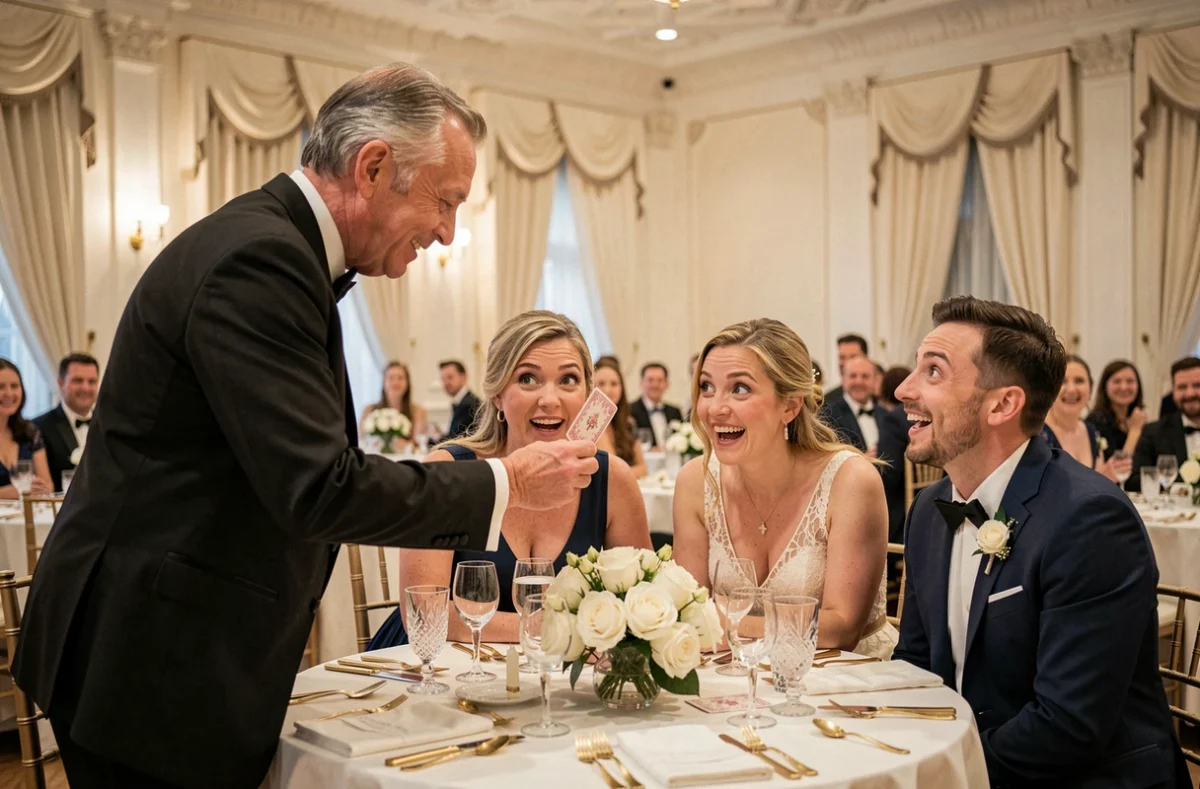
3. Live collective mural painted by an artist
A professional painter creates a painting of the evening in real-time. Guests see it progress over the hours, from the initial sketch to the finished canvas at the end of the reception.
What distinguishes this activity is that it asks nothing of the guests. No forced participation, no microphone, no stress. The painting becomes a physical memory of the wedding, much more personal than a group photo. Some artists add elements requested by guests throughout the evening, creating a natural excuse for interaction.
4. Analog photobooth with instant prints
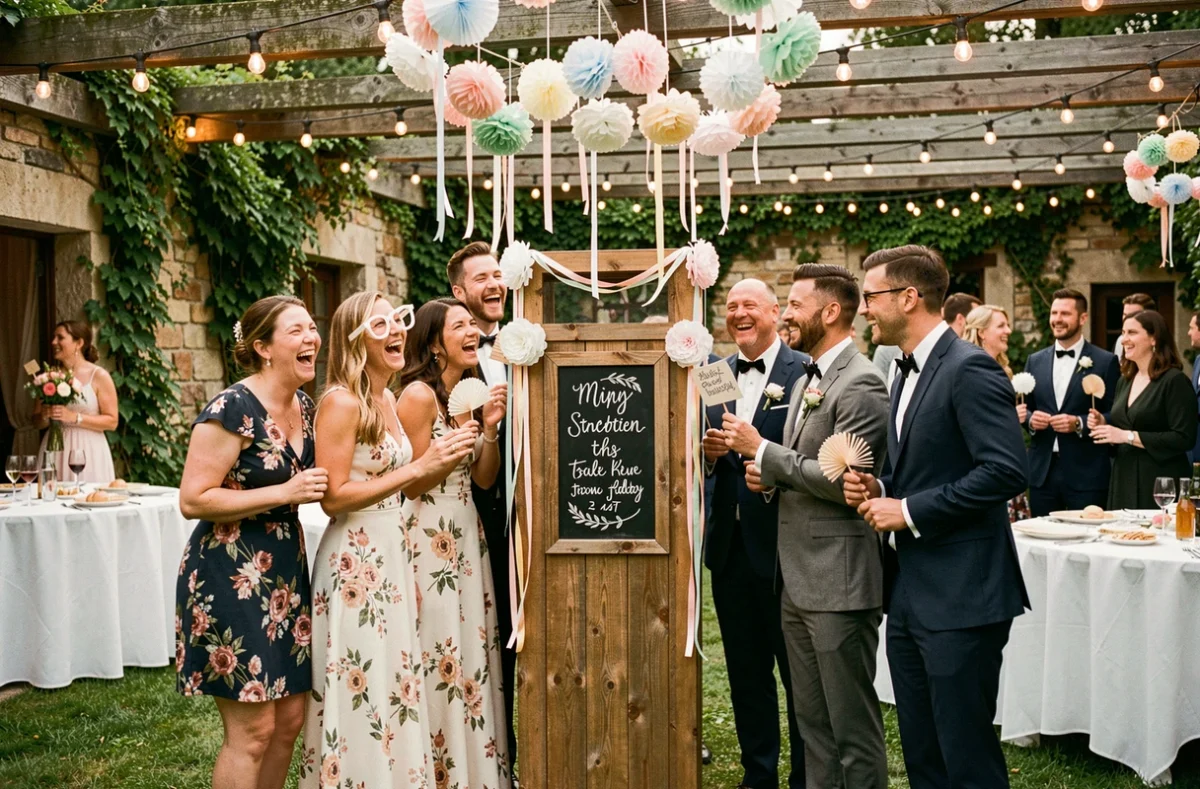
The photobooth remains a classic, but the polaroid or on-site thermal printing version changes the experience. Guests leave with a physical print, not a digital file forgotten in a phone.
To stand out, prepare a corner with props that align with the wedding theme (no generic plastic mustaches). A painted backdrop or dedicated floral decor gives a true visual identity. Also, prepare an album where each guest can stick their print with a little note: it’s a visual guestbook that is much more consulted than a blank notebook.
5. Live caricaturist during the meal
An artist circulates between tables and sketches guests in just a few minutes. The portrait goes home with the person, creating a light and individual memory.
This activity works particularly well during the meal’s downtime (between courses, during dessert). It doesn’t interrupt anything, requires no sound equipment, and adapts to all ages. The only constraint: ensure the caricaturist agrees not to publish the portraits on their social media without the subjects’ consent.
6. Collaborative investigation with collective resolution
Each table receives a dossier of clues (photos, fictional testimonies, objects) and must solve a mystery. The difference from the escape game is that tables must cooperate with each other to assemble the final solution.
This narrative format strengthens bonds between groups that don’t know each other. Each table is assigned a complementary role (witnesses, suspects, investigators), encouraging people to mingle. The resolution is done collectively, in front of everyone, with a revelation related to an anecdote about the couple.
7. Flower crown or boutonniere workshop
A stand with fresh flowers, wire, and a simple tutorial allows guests to create their own accessory. The activity lasts about ten minutes and is suitable for both children and adults.
This type of workshop runs continuously, without a permanent facilitator. Just prepare:
- Pre-cut flowers and foliage, suited to the season and theme
- Flexible wire and floral tape for the structure
- A finished model as an example, visible at the stand
8. Personalized musical blind test with the couple’s playlists
The DJ plays excerpts of songs related to the couple’s story (first date, trip, marriage proposal). Guests guess the title and the connection to the couple.
What makes this blind test different from a classic music quiz is the narrative dimension. Each correct answer unlocks an anecdote told by the witnesses or projected on screen. Guests discover moments of the couple they didn’t know.
9. Light drone show to close the evening
Synchronised drones create shapes in the sky (couple’s initials, date, heart). This format replaces the traditional fireworks with a clear advantage: no noise, no pyrotechnic waste.
Specialized providers program custom choreographies, often timed to music chosen by the couple. It’s a more expensive option than traditional fireworks, but the visual impact and ecological dimension justify the investment for couples sensitive to environmental sobriety.
10. Personalized song performed by the witnesses
The witnesses perform a well-known hit by changing the lyrics to tell the couple’s story. Prepared several weeks in advance, this activity remains one of the most emotionally impactful.
To make it work, three practical rules:
- Choose a tune that everyone knows, with a simple chorus to sing along
- Limit the duration to three or four minutes to maintain attention
- Rehearse at least twice with the DJ to sync the sound and rhythm
The effect relies on sincerity, not vocal quality. A well-written text to a popular tune resonates more than a speech read from a phone.
The common thread of these ten activities remains the same: chosen participation, controlled duration, zero discomfort. Planning a simple schedule with two or three key moments spread between the cocktail, meal, and evening is enough to give rhythm without overwhelming the day.