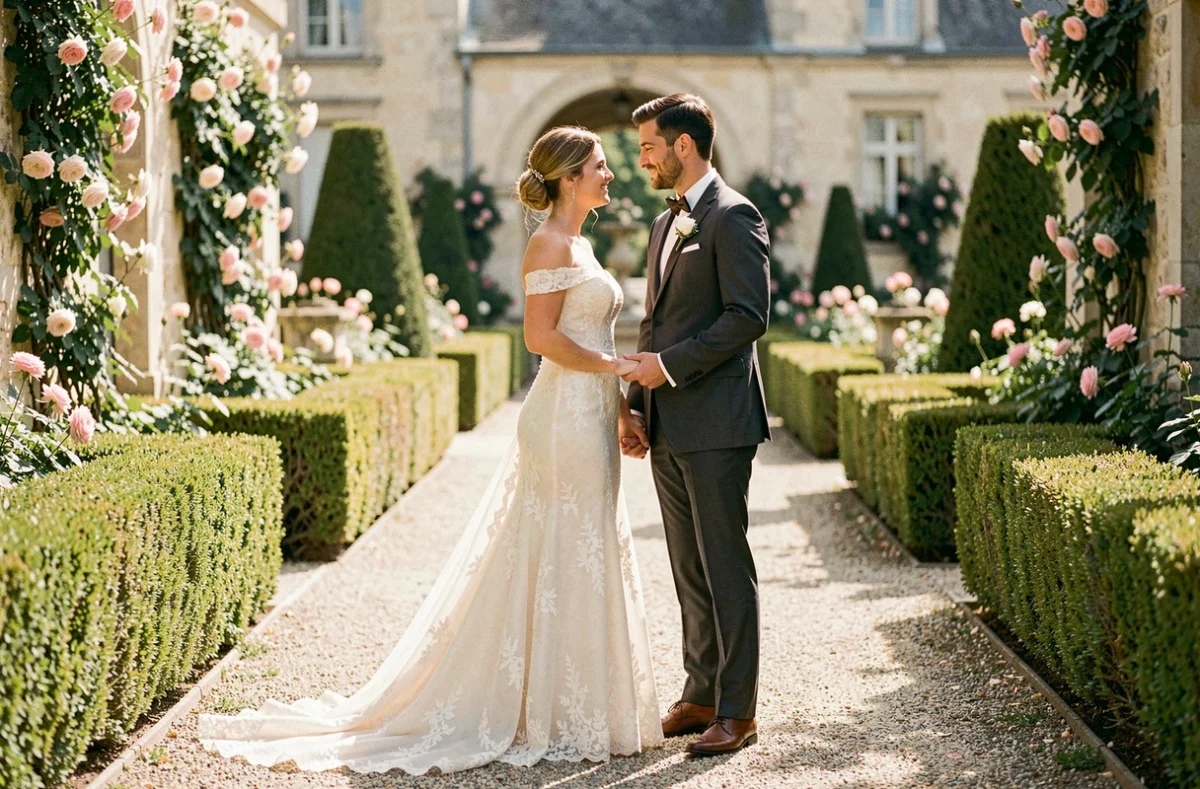
Marriage in France is governed by a precise legal framework that shapes the timeline long before couples choose their decorations or menu. The civil ceremony must take place in a municipality where one of the future spouses, or one of their parents, has a home or residence. This administrative requirement can influence the reception venue just as much as the couple’s personal preferences.
Administrative requirements and the actual wedding timeline in France
Choosing an estate or château for the reception does not automatically give you the right to have the civil ceremony in that municipality. The rule linking the ceremony to a home or residence applies without exception. Couples who rent a venue far from home will need to make two separate trips or arrange the civil ceremony in advance.
The publication of the banns requires a minimum of ten days before the ceremony. The wedding cannot take place until this period has expired. In practice, this means submitting the paperwork to the town hall several weeks before the desired date, allowing for the processing times of each municipality.
This administrative timeline runs alongside the schedule for the celebrations. Couples who book a reception venue a year in advance sometimes forget that the civil ceremony has its own deadlines. To keep up with wedding news and plan ahead for these steps, it’s best to start with the town hall paperwork before confirming the caterer.
Wedding budget: the gap between estimates and actual expenses
According to a report based on more than 1,300 couples married in 2025, most couples exceed their original budget. The difference doesn’t always come from obvious big-ticket items such as catering or the venue, but from smaller expenses that add up: outfit alterations, vendors’ travel costs, tips and accommodation for family and friends.
Fixed costs and variable costs per guest
Distinguishing between fixed and variable costs is an underrated budgeting tool. The photographer, DJ and venue rental are fixed costs. Catering, drinks and guest favors vary directly with the number of guests.
- Cutting the guest list reduces variable costs but has no effect on fixed costs, which often make up the largest share of the budget.
- Setting aside a contingency of at least 10% of the total budget helps cover common overruns without forcing last-minute compromises.
- Separating “fixed” and “per person” items in a spreadsheet makes it easy to compare different guest-list scenarios before finalizing the list.
This accounting approach may not be romantic, but it helps prevent financial tensions from affecting the first weeks of married life.
Wedding trends for 2025–2026: smaller celebrations and more focused spending
Recent data confirms a broader trend: weddings are getting smaller, but the cost per guest is rising. Couples are inviting fewer people without compromising on the quality of the experience for those who attend. A gourmet meal for 60 replaces a buffet for 150.
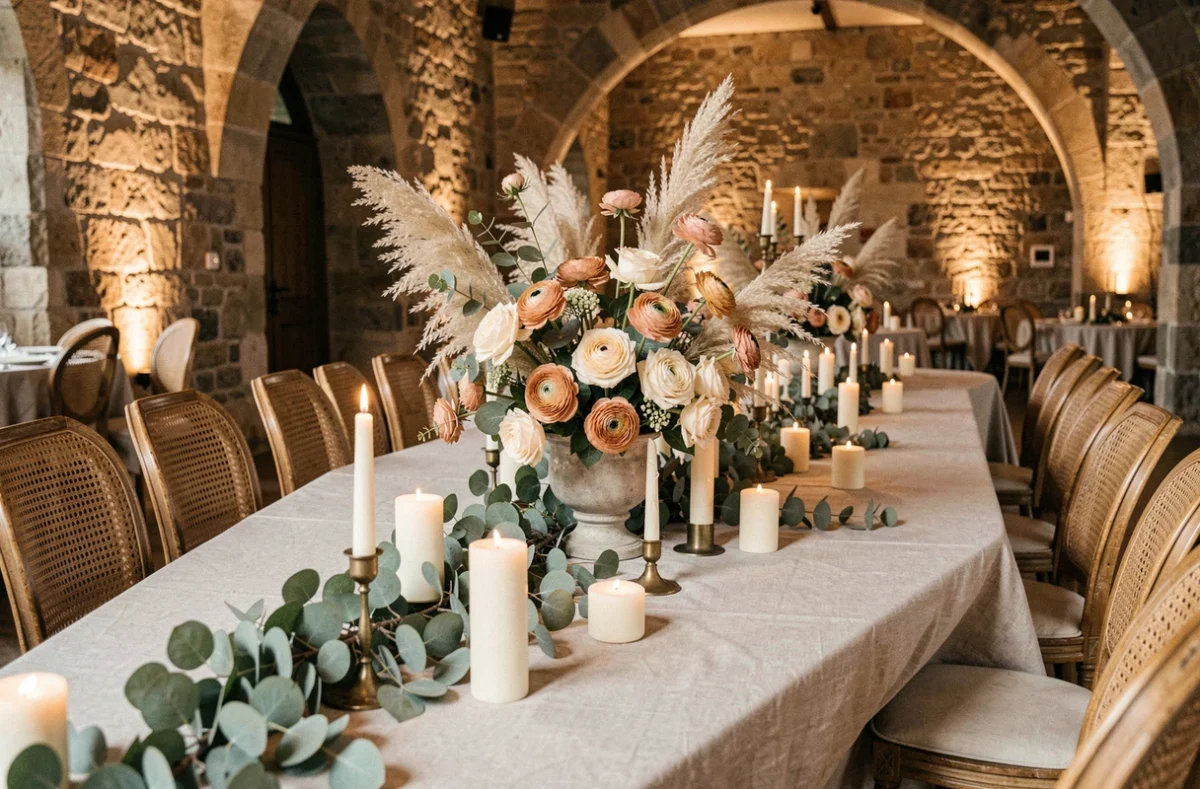
This more intimate format also changes the atmosphere. With fewer tables to manage, the decor can be more personalized. Stationery, centerpieces and floral arrangements can be designed individually rather than produced in bulk.
Decor and style: what’s changing in practice
Minimalist and more opulent styles coexist, with neither trend dominating. The difference from previous years lies in the stronger consistency across all visual elements: the color palette of the invitation carries through to the menu, chair ribbons and cake.
Local, seasonal flowers are taking precedence over imported varieties. This choice reflects a more eco-conscious approach to weddings, but it also makes financial sense: out-of-season flowers cost considerably more and are less able to withstand transportation.

Guest list: the decision that shapes everything else
The guest list is more than a logistical detail. It’s the key factor determining the venue, budget and format of the day. Finalizing the number too late in the planning process creates a domino effect: the caterer revises the quote, the seating plan overflows, and the chosen venue turns out to be too small or too large.
A practical approach is to divide guests into three groups: people whose absence would be unthinkable, those whose presence matters a great deal, and those invited out of social convention. When the budget requires cuts, the third group is the first to trim.
Managing family tensions over the guest list
The couple’s parents may have their own guest lists. Setting a quota for each group from the outset—for example, one third for each side of the family and one third for the couple’s friends—provides a clear framework. Agree on this split before booking a venue, not afterward.
The smaller format that dominates current trends makes this conversation easier: it’s simpler to explain that you’ve deliberately chosen an intimate celebration than to justify excluding specific people.
Personalizing a symbolic ceremony without resorting to clichés
A symbolic ceremony complements the civil ceremony for couples who want a more personal moment. It has no legal standing, but offers complete freedom over the content: readings, music, symbolic rituals and speeches from loved ones.
A common pitfall is piling on one segment after another without an overarching theme. A well-planned 20-minute ceremony makes a stronger impression than an hour of back-to-back speeches. Three or four contributions are enough. Each speech should have a set length and theme to avoid repetition.
- Ask speakers to prepare a written text—even if they plan to improvise on the day—as a safety net.
- Alternating readings, music and rituals creates a rhythm that keeps guests engaged.
- Appointing a single officiant, whether a close friend or a professional, helps ensure the ceremony feels cohesive.
A symbolic ceremony is also an opportunity for the couple to include cultural references, family traditions or personal commitments that don’t fit within the civil ceremony.
Planning a wedding means balancing legal, financial and relationship considerations alongside aesthetic choices. Start with the administrative paperwork, set a realistic budget with a contingency and finalize the guest list before making any other decisions. Taking these three steps in this order helps prevent most of the stress that tends to arise in the final weeks.