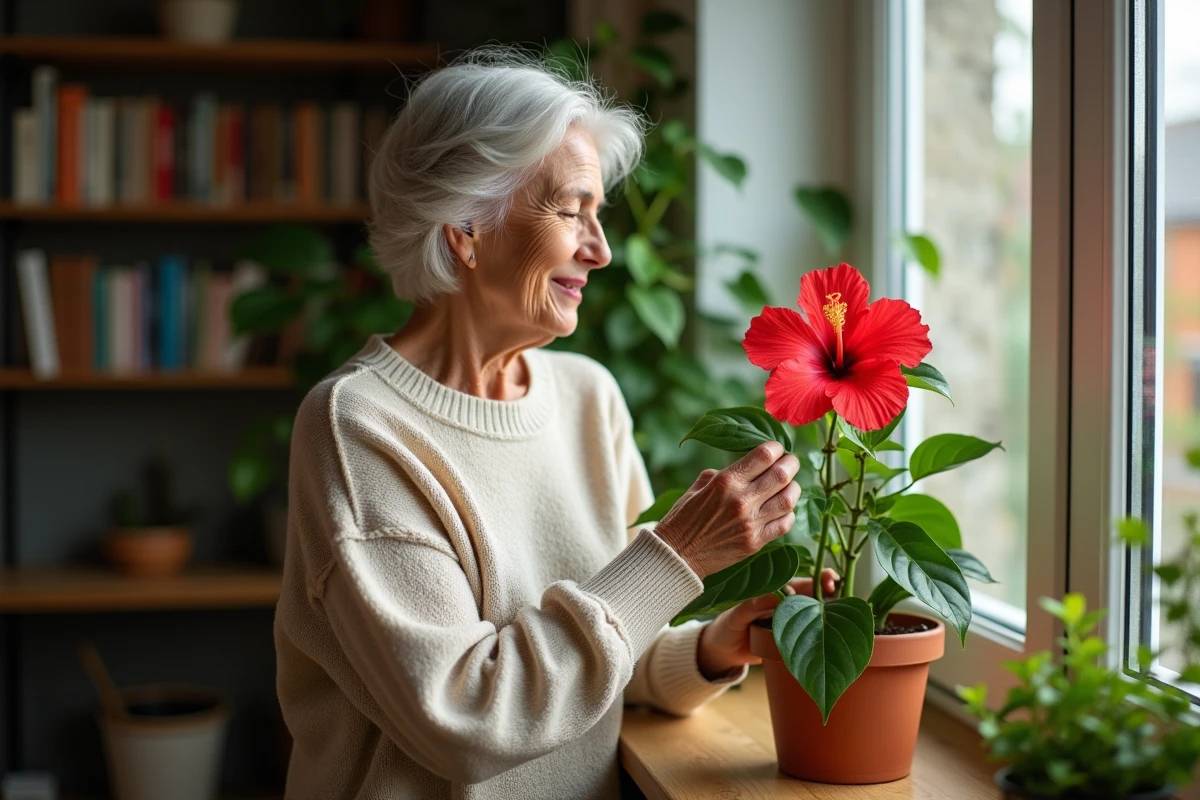
An hibiscus can categorically refuse to bloom for months, even with regular watering and adequate light exposure. The addition of conventional fertilizer or an increase in temperature never guarantees the appearance of buds.
Some cultivars require rest periods or specific pruning to stimulate their blooming. Others thrive against the usual horticultural rules, surprising even experienced gardeners. Propagation methods like cuttings follow precise cycles to ensure the vigor of new plants.
Understanding the essential needs of indoor hibiscus: light, watering, and environment
Getting a hibiscus rosa sinensis to thrive indoors requires juggling several parameters: light, water, substrate; no detail can be left to chance. The location makes all the difference: near a south- or west-facing window, the plant enjoys bright light while staying protected from burns. The sunlight boosts the health of the leaves and encourages bud formation. If the indoor hibiscus lacks light, it slows down, stagnates, and delays blooming.
Watering also needs close monitoring. Keep the substrate slightly moist, never soggy. The roots do not appreciate excess water. Water with room temperature water as soon as the surface of the potting soil is dry to about an inch. Above all, do not let water stagnate in the saucer: suffocated roots, compromised blooming. A stable ambient air, free from cold drafts, and a humidity level above 50% help keep the leaves supple and healthy.
The choice of potting soil is equally important. A rich, airy mix with good drainage helps the plant to thrive. To fine-tune every detail, consult the guide from Votre Déco for hibiscus. It gathers proven methods to adapt your indoor environment from spring to winter. By mastering these key points, you prepare the ground for a spectacular bloom.
Why is my hibiscus not blooming? Common mistakes to avoid
When the hibiscus sulks and refuses to bloom, there is always an explanation. Sometimes, the root of the problem lies in unsuspected details. Light often comes back to the bench of the accused: a hibiscus placed too far from a window or basking in too dark an environment has little chance of offering abundant blooms. Nothing replaces a real sunbath, provided you avoid the scorching hours.
The other ingredient is fertilizer. Too much nitrogen, and the plant is covered in leaves at the expense of flowers. To encourage blooming, choose a fertilizer rich in potassium and phosphorus, or a complete formula enriched with trace elements, to be applied during the growing season. And above all, never on a dry substrate: that guarantees root burn.
Here are common pitfalls to spot and correct:
- Irregular watering: excess or lack of water, both hinder blooming.
- Fluctuating temperatures: sudden changes or cold drafts weaken the plant.
- Pot too small: cramped roots, and floral buds take their time.
On another front, the fight against diseases and pests should never be neglected. Spider mites, mealybugs, whiteflies, or aphids exhaust the plant and slow its vigor. At the first signs, an application of black soap or vegetable oil may be enough to halt the invasion. Indoors, air circulates less: vigilance is therefore essential at the slightest anomaly.
Cutting and propagation: accessible techniques to enrich your collection
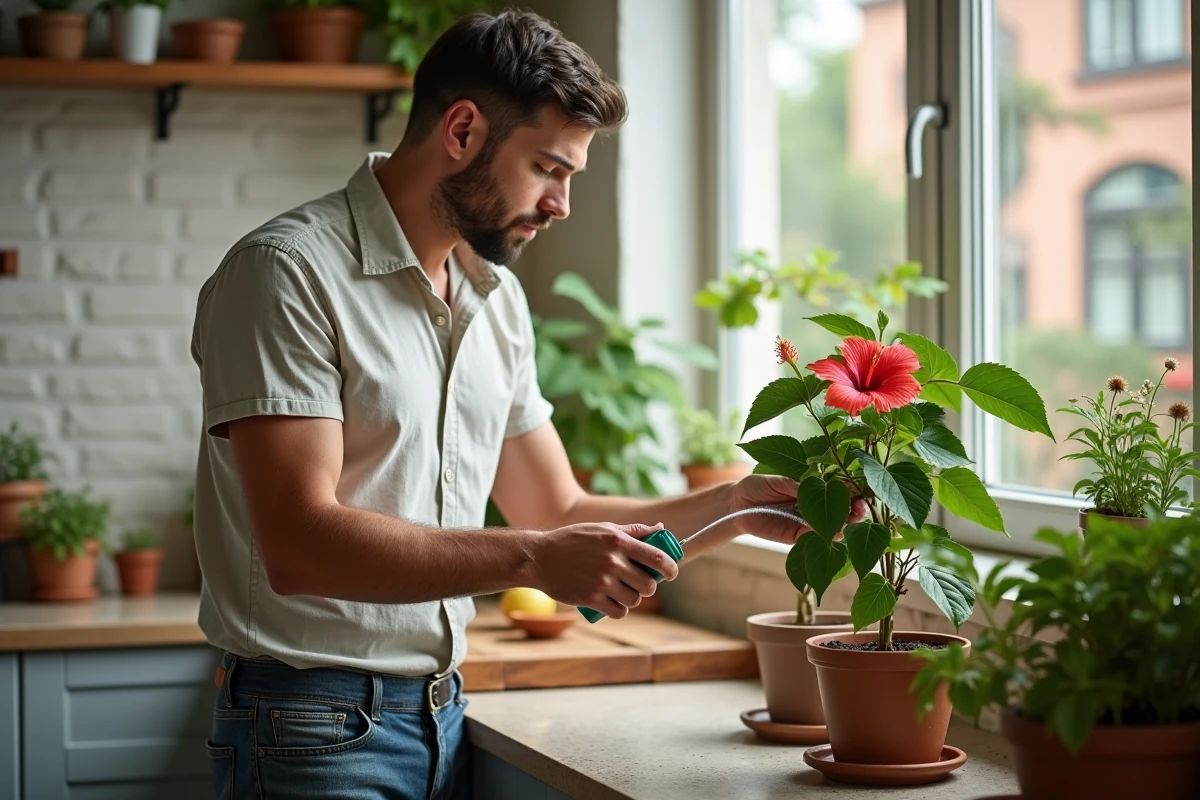
Hibiscus cuttings allow you to easily multiply your flowering plants, from the most classic varieties to the most original. Spring is the ideal season: semi-woody stems are full of energy. Take a healthy stem, neither too young nor too hard, cut just below a node, and keep only the top two or three leaves. This way, the cutting concentrates its energy on rooting.
To prepare the ground, equip yourself with a few pots and a light potting soil mix enriched with perlite or sand. A layer of clay balls at the bottom ensures perfect drainage. Plant the cutting, gently firming it in. To boost rooting, wrap it in a transparent plastic bag to maintain a humid atmosphere.
Three reflexes to adopt for success:
- Keep the substrate moist without excess
- Opt for gentle light, without direct sunlight on the cutting
- Monitor for the appearance of mold or unwanted insects
After a few weeks, roots develop, and the cutting can be repotted into a slightly larger container. This marks the beginning of a new plant adventure: an indoor plant ready to flourish and surprise with its future blooms. The cycle begins anew, each time promising a hibiscus ready to reveal its colors.