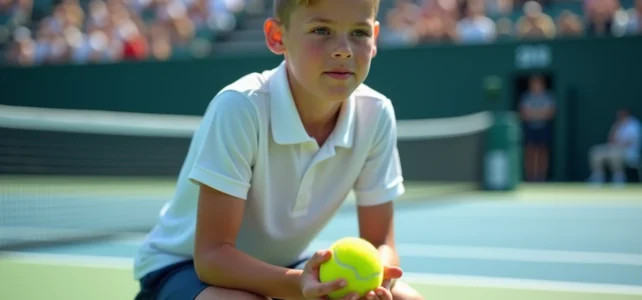
Ball boys do not receive a salary in the sense of French labor law. This statement is surprising, but it directly stems from the legal status applied by tournament organizers, including Roland-Garros. Understanding why requires delving into the regulatory framework of sports volunteering and the indirect compensation mechanisms surrounding this role.
Legal status of ball boys: regulated volunteering and employment of minors
The majority of ball boys engaged in French tournaments are minors. This point conditions everything else. The Labor Code strictly regulates the employment of those under sixteen, and sports competition organizers almost systematically choose the volunteer status to avoid the constraints associated with an employment contract.
Recommended read : The effectiveness of a professional hood
This status implies the absence of a paid subordination link. The ball boy does not sign a contract, does not receive a payslip, and is not affiliated with a social protection scheme for this activity. In return, the organizer subscribes to insurance covering on-site accidents and takes care of participation-related expenses (transport, meals, equipment).
The French Tennis Federation oversees the selection for Roland-Garros, in coordination with affiliated clubs. Candidates go through a process that spans several months, with physical and technical training sessions. We observe that this rigorous process contributes to maintaining confusion: the selection resembles professional recruitment, while the framework remains that of associative volunteering.
Read also : Immersive Diving: The Hidden Wonders of the Ocean
To better understand the issue of the salary of ball boys in tennis, it is necessary to distinguish between monetary compensation and in-kind benefits, two concepts that the general public often confuses.
Indirect compensation and in-kind benefits at tennis tournaments
Ball boys do not receive money, but they receive a range of material benefits. At a Grand Slam tournament like Roland-Garros, these benefits include complete sports equipment (uniform, shoes), meals throughout the tournament, and access to facilities.
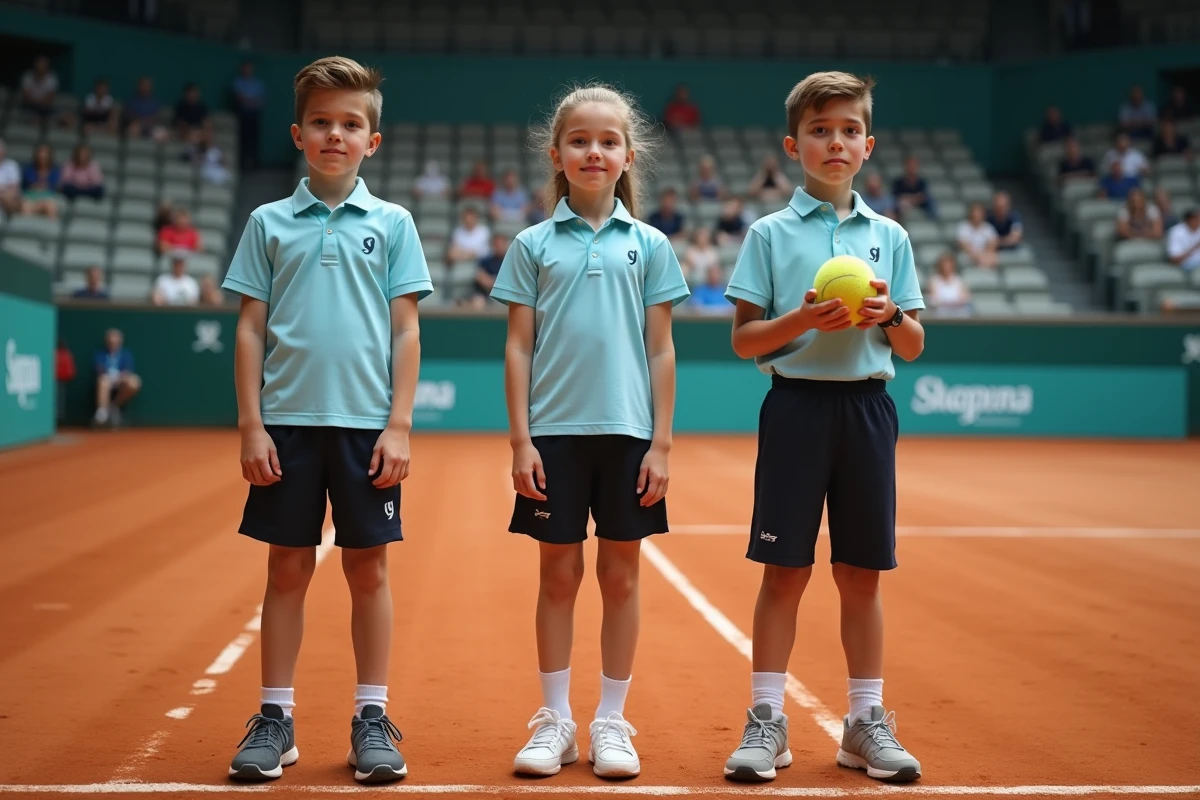
The equipment provided by the tournament’s technical sponsors represents a significant value. The young participants leave with several complete outfits, sometimes exclusive editions that are not sold commercially. For training clubs, this is a concrete recruitment argument.
Beyond the equipment, the experiential dimension weighs heavily in the balance. Ball boys are in close proximity to the best players in the world, have access to the locker rooms, and experience the tournament from the inside. This immersion constitutes the true “payment” received by the young participants and their families.
The situation varies depending on the tournaments. ATP or WTA competitions of a lower category offer fewer benefits. Challenger tournaments sometimes provide only meals and access to matches. Private exhibitions, on the other hand, may directly compensate ball boys, as the associative framework does not apply in the same way.
Selection of ball boys at Roland-Garros: process and criteria of the Federation
The selection process for Roland-Garros involves tennis clubs from all over France. Candidates generally must be licensed in a club affiliated with the French Tennis Federation, fall within an age range defined by the organization, and demonstrate specific physical and behavioral skills.
- Endurance and reactivity: ball boys spend hours on the court under sometimes difficult weather conditions, with repeated sprints between points
- Knowledge of tennis rules: each ball boy must anticipate the flow of the game to position themselves without disturbing the players or the referee
- Discipline and discretion: behavior on the court is codified, from the immobile posture between exchanges to the way of handing the ball to the server
The selection spans several months, with elimination phases organized at the regional and then national level. Clubs that train ball boys dedicate specific training slots, which represents a significant commitment for both the young participants and their coaches.
This selection process explains why the question of salary arises so often. Families invest time and energy in preparation, and the free nature of the service may seem out of place given the demands required.
Variability depending on tournaments: from Grand Slam to secondary circuits
Narrowing the question to the case of Roland-Garros distorts the perspective. The status and benefits of ball boys change radically from one tournament to another.
Among the four Grand Slam tournaments, practices differ. The Australian Open, Wimbledon, and the US Open each apply their own recruitment and compensation rules. The common point remains the absence of formal salary, but the in-kind benefits vary in quantity and quality.

On the Challenger circuit or national tournaments, ball boys often come from the local club hosting the competition. Benefits may sometimes be limited to a meal and an access badge. No sponsored equipment is guaranteed.
- Grand Slam: complete equipment, meals, transport, premium experience, national selection
- ATP/WTA (Masters, 500, 250): partial equipment, meals, regional or local selection
- Challenger and ITF: meals, site access, no guaranteed equipment
- Private exhibitions: direct compensation possible, variable contractual framework
This heterogeneity shows that talking about a “ball boy salary” in the singular does not make sense. The framework depends on the organizer, the country, and the level of competition.
The debate on the compensation of ball boys in tennis rests on a confusion between paid work and regulated volunteer engagement. As long as organizers maintain the associative status and applications remain massive, the economic structure of this role will not change. The young people who go through this experience gain unique access to the professional world of tennis, not a bank transfer.